Portal de Legado / Legacy Portal
-Portal de Legado
-Legacy Portal
ENGLISH BELLOW
El Autor de Librería vs. El Autor de Biblioteca: Un Compromiso con la Posteridad
A menudo me preguntan qué significa realmente que un libro esté en la Library of Congress, en el SINABI o en sistemas globales de catalogación. Para entenderlo, debemos distinguir entre dos destinos que, aunque parecen iguales, tienen propósitos y alcances radicalmente distintos para la humanidad.
1. El Autor de Librería: El Encuentro del Momento
El autor de librería habita el mundo del comercio y la tendencia. En este espacio vibrante pero transitorio, el libro es un producto que compite por visibilidad. Si no se vende en unos meses, es retirado para dar paso a la siguiente novedad.
Lamentablemente, los "autores de estantería" suelen morir muy pronto en la memoria colectiva; cuando el ciclo de consumo termina, su obra pasa al olvido. Su alcance es inmediato, pero su huella es superficial.
2. El Autor de Biblioteca: El Guardián del Legado
El autor de biblioteca pertenece al mundo del patrimonio y la permanencia. Cuando mi obra entra en archivos nacionales, deja de ser un producto comercial para convertirse en un documento histórico.
Inmortalidad Literaria: A diferencia de la librería, la biblioteca no devuelve el libro si no se vende. Lo guarda para siempre. Es una semilla plantada para las generaciones venideras; un legado que perdura mucho después de que las modas hayan pasado.
Validación y Curaduría: Mientras que la librería se mueve por algoritmos, la biblioteca se mueve por valor cultural. Ser catalogado oficialmente significa que una institución reconoce en la obra un valor que merece ser preservado para el futuro de la humanidad.
Mi Carrera: Una Vocación de Servicio
He decidido diseñar mi carrera de esta forma por una razón fundamental: el deseo de servir y trascender. Entiendo la escritura no como un camino hacia la fama efímera, sino como una responsabilidad hacia el lector de hoy y el investigador de mañana.
He trabajado para que mi voz no muera en una estantería vacía. Mi presencia en redes globales como WorldCat, Hoopla, CloudLibrary, el Minuteman Library System y OverDrive es una garantía de acceso democrático. Mi legado no está guardado bajo llave ni limitado por un precio; está sembrado en la memoria colectiva del mundo para servir como un recurso eterno.
ESPAÑOL
Mi Presencia en Bibliotecas y Archivos Oficiales
Registro, Catalogación y Acceso Documental
Con fines de claridad, referencia y tranquilidad documental, comparto a continuación el alcance verificable de cómo mi obra se encuentra registrada, catalogada y accesible dentro de sistemas bibliográficos, archivos legales y redes de bibliotecas públicas a nivel nacional e internacional.
Este registro garantiza que mis libros no se limitan a una circulación contemporánea, sino que forman parte de un patrimonio literario documentado, preservado conforme a procedimientos técnicos y marcos legales establecidos.
1. Library of Congress – Estados Unidos
Registro Legal y Huella Institucional
Mis obras se encuentran registradas ante la U.S. Copyright Office, organismo oficial que forma parte de la Library of Congress. Este hecho constituye el nivel más claro y verificable de presencia institucional dentro de la Biblioteca del Congreso.
Diversos títulos —entre ellos The Journey Within y The Dragon’s Nest— cuentan con registros oficiales de derechos de autor, cada uno identificado por un número único de registro (serie TX u otras), que reside permanentemente en los archivos legales y en el sistema público de registros de la Library of Congress.
Alcance del registro:
Este registro establece una huella legal formal y permanente dentro de la Library of Congress.
Garantiza protección jurídica nacional en los Estados Unidos.
Forma parte del archivo histórico legal administrado por la LC.
Aclaración técnica importante:
El registro de derechos de autor no implica automáticamente que una obra haya sido adquirida o incorporada a la colección física permanente de la Biblioteca del Congreso listada en su Main Online Catalog (catalog.loc.gov).
Es común y plenamente normal que autores —especialmente independientes— cuenten con registros legales confirmados sin que todas sus obras aparezcan aún como registros bibliográficos completos de estantería física.
Este estatus no representa una ausencia, sino una distinción técnica entre archivo legal y colección física, ambos gestionados por la Library of Congress bajo sistemas diferentes.
2. Sistema Nacional de Bibliotecas (SINABI) – Costa Rica
Registro Cultural y Memoria Documental
Mi producción literaria forma parte de los registros bibliográficos del Sistema Nacional de Bibliotecas de Costa Rica (SINABI), incluyendo la Biblioteca Nacional Miguel Obregón Lizano.
Esta inclusión integra mis obras al registro cultural y documental público del país, asegurando su preservación, consulta y disponibilidad como parte de la memoria bibliográfica nacional, conforme a los lineamientos del sistema cultural costarricense.
3. WorldCat (OCLC) y Redes Bibliográficas Globales
Mis títulos se encuentran indexados en WorldCat, el catálogo bibliográfico colectivo más amplio del mundo, administrado por OCLC.
Esta indexación permite que bibliotecas, académicos e investigadores de múltiples países puedan localizar, verificar y referenciar técnicamente mis obras dentro de redes bibliotecarias internacionales, facilitando procesos de consulta y préstamo interbibliotecario.
4. Acceso Público y Plataformas Digitales
Además de su preservación documental, parte de mi obra está disponible mediante plataformas de préstamo digital utilizadas por bibliotecas públicas, lo que amplía el acceso a lectores en entornos físicos y digitales.
Plataformas de acceso:
Hoopla Digital
cloudLibrary
OverDrive / Libby
La disponibilidad puede variar según el título, el formato, la región y las condiciones de licencia establecidas por cada red bibliotecaria.
5. Redes de Bibliotecas Públicas en Estados Unidos
🏛️ Minuteman Library Network – Massachusetts
Las obras están catalogadas y son localizables dentro de la Minuteman Library Network, permitiendo su solicitud a través de 36 bibliotecas públicas participantes, conforme a las políticas del consorcio.
(Lista completa mantenida según lo indicado)
🏙️ Chicago Public Library – Illinois
Las obras figuran en el catálogo central de la Chicago Public Library (CPL), lo que permite su localización y solicitud desde su sistema central y sucursales, sujeto a disponibilidad y normas de circulación.
6. Redes Académicas y Sistemas Metropolitanos
Determinados registros pueden ser localizables a través de catálogos compartidos o redes académicas, sin implicar afiliación directa, incluyendo:
Harvard University Libraries
Yale University Library
Stanford University Libraries
Columbia University Libraries
Princeton University Library
Asimismo, mis obras pueden ser localizables mediante sistemas metropolitanos como:
New York Public Library
Seattle Public Library
King County Library System
Nota Final – Declaración Legal y Archivística
Este documento describe exclusivamente registro legal, catalogación bibliográfica, localización y vías de acceso.
No atribuye premios, afiliación formal, patrocinio, respaldo institucional ni estatus honorífico alguno.
No es material promocional.
No es atribución reputacional.
Es trazabilidad bibliográfica verificable y registro cultural documentado.
ENGLISH
The Bookstore Author vs. The Library Author: A Commitment to Posterity
I am often asked what it truly means for a book to be held in the Library of Congress, SINABI, or global cataloging systems. To understand this, we must distinguish between two destinations that, while appearing similar, have radically different purposes and reaches for humanity.
1. The Bookstore Author: The Momentary Encounter
The bookstore author lives in the world of commerce and trends. In this vibrant but transitory space, a book is a product competing for shelf space. If it doesn’t sell within a few months, it is removed to make room for the next novelty.
Unfortunately, "shelf authors" often "die" very early in the collective memory. Because they depend exclusively on the consumption cycle, once the book disappears from the front window, the author fades into oblivion. Their reach is immediate, but their footprint is shallow.
2. The Library Author: The Guardian of Legacy
The library author, on the other hand, belongs to the world of heritage and permanence. When my work enters national archives, it ceases to be a mere commercial product and becomes a historical document.
Literary Immortality: Unlike a bookstore, a library does not "return" a book if it doesn't sell. It keeps it forever. It is a seed planted for future generations—a legacy that endures long after fashions have passed.
Validation and Curatorship: While bookstores are driven by algorithms and sales, libraries are driven by cultural value. Being officially cataloged means an institution recognizes a value in the work that deserves to be preserved for the future of humanity.
My Career: A Vocation of Service
I have chosen to design my career this way for one fundamental reason: the desire to serve and to transcend. I view writing not as a path to fleeting fame, but as a responsibility toward today's reader and tomorrow's researcher.
I have worked to ensure my voice does not die on an empty shelf. My presence in global networks such as WorldCat, Hoopla, CloudLibrary, the Minuteman Library System, and OverDrive is a guarantee of democratic access. My legacy is not locked away or limited by a price tag; it is sown into the world’s collective memory to serve as an eternal resource for all.Presence in Official Libraries and Archives
Registration, Cataloging, and Documentary Access
For clarity, reference, and documentary assurance, the following outlines the verifiable scope of how my works are registered, cataloged, and accessible within bibliographic systems, legal archives, and public library networks at national and international levels.
This record ensures that my books extend beyond contemporary circulation and form part of a documented literary heritage, preserved in accordance with established technical and legal frameworks.
1. Library of Congress – United States
Legal Registration and Institutional Footprint
My works are registered with the U.S. Copyright Office, an official department of the Library of Congress. This constitutes the most definitive and verifiable form of institutional presence within the Library of Congress.
Several titles — including The Journey Within and The Dragon’s Nest — hold official copyright registrations, each assigned a unique registration number (TX-series or equivalent), which resides permanently within the Library of Congress’s legal archives and public registration systems.
Scope of this registration:
Establishes a formal and permanent legal footprint within the Library of Congress.
Provides national legal protection within the United States.
Forms part of the LC’s historical legal record.
Important technical clarification:
Copyright registration does not automatically imply physical acquisition or placement within the Library of Congress’s Main Online Catalog (catalog.loc.gov), which primarily lists works selected or deposited for the Library’s permanent physical collections.
It is common for independent authors to hold confirmed legal copyright records without yet appearing as full bibliographic holdings in the LC’s physical shelf catalog. This reflects a technical distinction between legal archival records and physical collection acquisition, both managed by the Library of Congress under separate systems.
2. National Library System (SINABI) – Costa Rica
Cultural Record and Documentary Memory
My literary works are included in the bibliographic records of Costa Rica’s National Library System (SINABI), including the National Library Miguel Obregón Lizano.
This inclusion integrates my publications into the country’s public cultural and documentary record, ensuring preservation, consultation, and access as part of Costa Rica’s national bibliographic memory.
3. WorldCat (OCLC) and Global Bibliographic Networks
My titles are indexed in WorldCat, the world’s largest collective bibliographic catalog, administered by OCLC.
This indexing enables libraries, scholars, and researchers worldwide to locate, verify, and reference my works across international library networks, supporting discovery and interlibrary access.
4. Public and Digital Access Platforms
In addition to archival preservation, selected works are available through digital lending platforms used by public libraries, expanding access through both physical and electronic environments.
Access platforms include:
Hoopla Digital
cloudLibrary
OverDrive / Libby
Availability varies by title, format, region, and licensing terms.
5. U.S. Public Library Networks
🏛️ Minuteman Library Network – Massachusetts
Works are cataloged and discoverable within the Minuteman Library Network, allowing requests through its 36 participating public libraries, subject to consortium policies.
🏙️ Chicago Public Library – Illinois
Works appear in the Chicago Public Library central catalog, enabling location and request through its main system and branches, subject to availability and circulation policies.
6. Academic and Metropolitan Library Systems
Certain records may be discoverable through shared academic catalogs or consortium networks, without implying direct affiliation, including:
Harvard University Libraries
Yale University Library
Stanford University Libraries
Columbia University Libraries
Princeton University Library
Additional discoverability may occur through major metropolitan systems such as:
New York Public Library
Seattle Public Library
King County Library System
Closing Note – Legal and Archival Statement
This document describes legal registration, bibliographic cataloging, discoverability, and access pathways only.
It does not claim awards, institutional endorsement, formal affiliation, or honorary status.
It is not promotional.
It is not reputational attribution.
It is verifiable bibliographic traceability and documented cultural record.
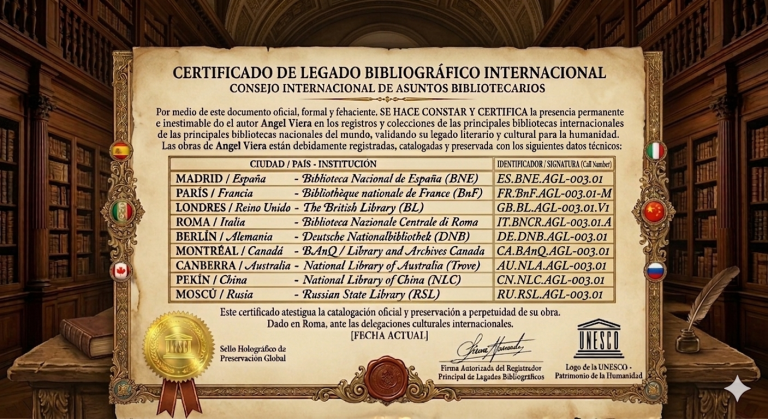
Institutionaly Cataloged
Institutional Cataloging Note
My published works are institutionally cataloged within national and international library systems, ensuring bibliographic traceability, public discoverability, and long-term archival preservation. This cataloging reflects formal registration and access pathways through recognized library networks and global bibliographic databases, without implying endorsement or affiliation.